
Smoke detection

Smoke detection

Smoke detection

Mission

Smoke detection after a fire and analysis of the impact on agriculture

U

Skills

Algorithm development, studies

Date

From 2020 to 2021

The work on smoke detection


The smoke emitted by fires, even thousands of kilometres from the source, can have a significant impact on the surrounding vegetation. This is particularly the case for vineyards, as the vinasse produced by smoke-affected grapes will have a strongly modified taste.

Fortunately, the Copernicus Atmospheric Monitoring Service (CAMS) provides a large amount of atmospheric data extracted from various physical models, satellite data and in situ observations.

The specific CAMS data indicate the location of smoke at any given time from a selected fire, both at ground level and at several heights above the ground. A first study by the Centre National d’Etudes Spatiales (CNES) showed that the specific CAMS data are difficult to use to determine the affected vineyards.

fumée detection copernicus magellium

The unit’s work consists of extending this proof-of-concept study by developing automatic tools to easily retrieve data stored in CAMSAPI, visualise it, extract localised data and test this methodology on a large number of people.

nous contacter observation terre magellium

The objectives of the smoke detection


      • Automatic recovery of CAMS data
      • Smoke impact index
      • Data visualization
      • QGIS plugin
      • Comparison with S5P and IASI acquisitions

Key partners

CNES, SPASCIA

Key words

observation, satellite, earth, studies, smoke, detection, copernicus, vineyard, agriculture, impact

observation de la terre

SCIENCE FOR EARTH CARE

The Earth Observation Unit of Magellium  is an expert in optical space missions and geophysical and biophysical applications. The EO unit provides high level of expertise and full capacity on the whole processing chain, enabling it to respond to all projects from the greatest space orders such as ESA and CNES.

Contact

eo@magellium.fr

+33 5 62 24 70 00

1, rue Ariane
31520 Ramonville Saint-Agne FRANCE

More info

www.magellium.com

Follow us

QRNN

QRNN

QRNN

Implementation of a Quantile Regression Neural Network

Mission

Uncertainty estimation via neural networks: recovery of atmospheric 𝐶𝑂2 and associated uncertainties

Instruments

IASI, AMSU

U

Skills

Radiometry, algorithmic development

Date

From 2019 to 2021

The QRNN project

The extraction and analysis of geophysical parameters from remote sensing measurements plays a crucial role in the knowledge of the Earth’s physical phenomena. Indeed, greenhouse gases are responsible for important effects on our atmosphere, such as the Earth’s climate change.

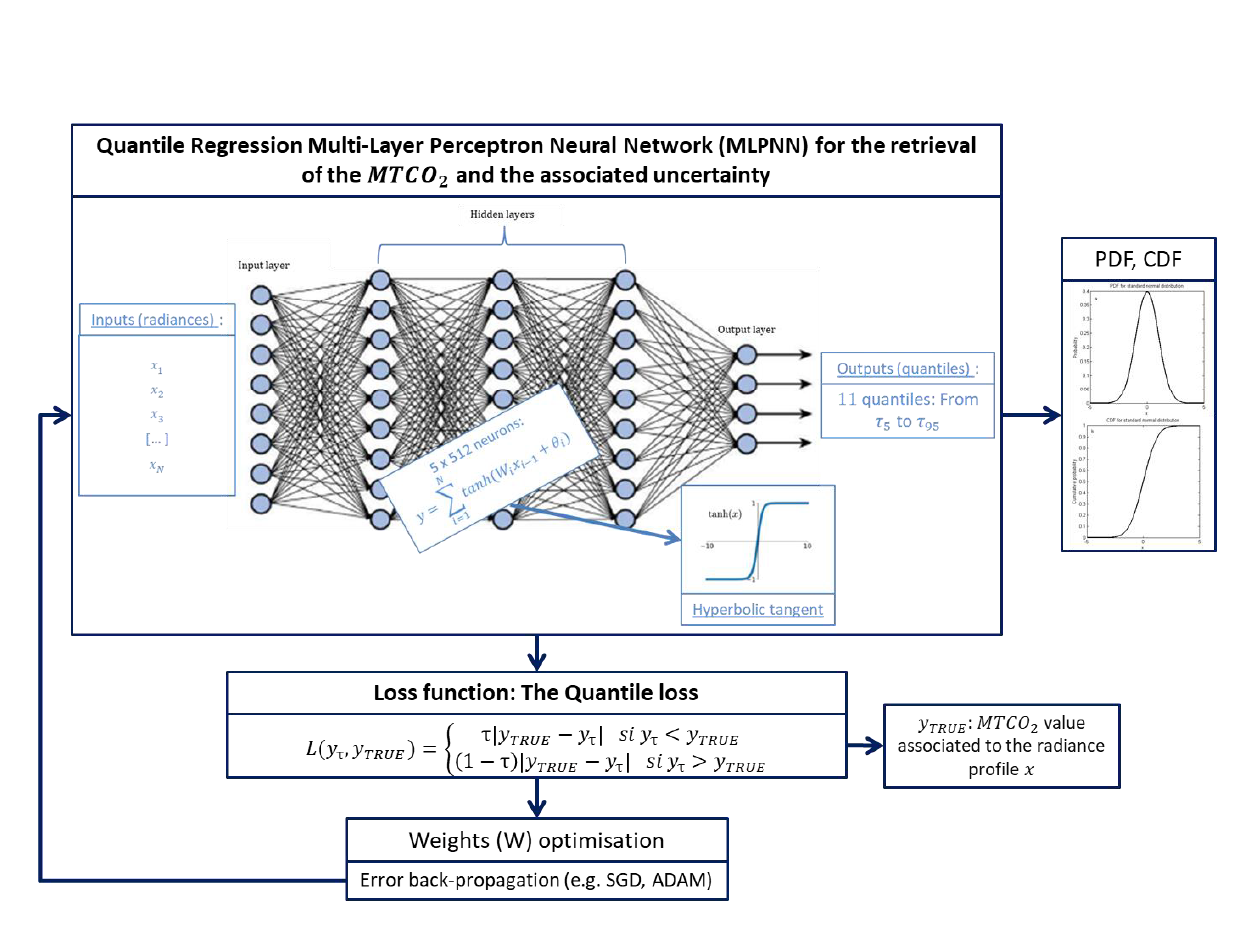
In this context, methods based on machine learning algorithms have become important in the scientific community. Multi-layer perceptual neural networks (MLPs) have proven to provide good estimates of atmospheric parameters. Also, they have proven to be more efficient (in terms of computational cost and processing of non-linear systems/models) than classical inversion methods, such as the optimal estimation method (OEM).

However, classical NR techniques do not provide information on the uncertainty of the recovered parameters.
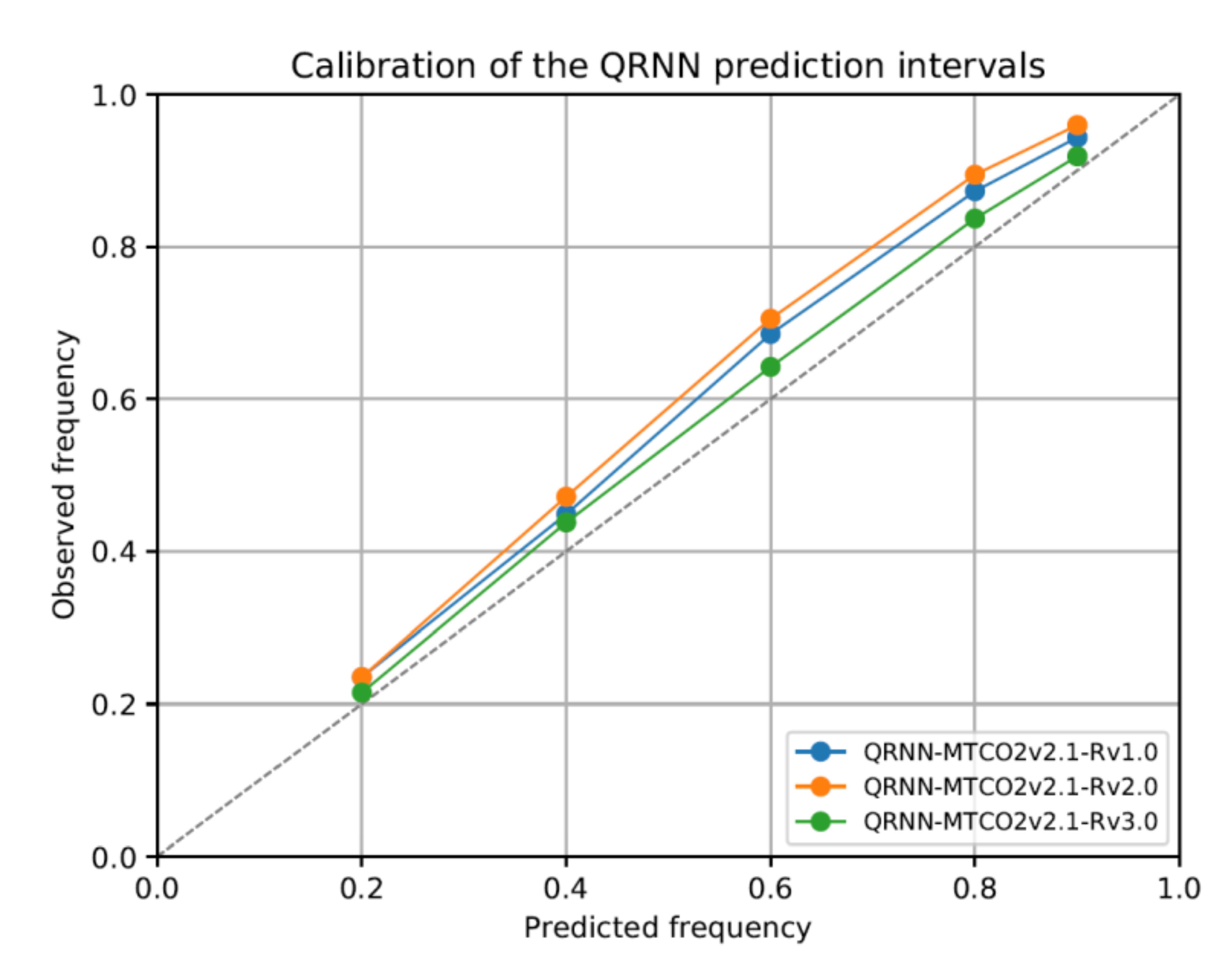
Yet this uncertainty information is essential for the exploitation of scientific products. For example, it is important for their use in systems for analysing and predicting atmospheric composition and/or dynamics.

regression quantile co2 magellium

Within this framework, the unit is in charge of understanding and estimating the potential of obtaining data on the composition of the thermal atmosphere, more precisely, on the content of 𝑪𝑶𝟐 in the troposphere. These measurements are made from infrared hyperspectral survey instruments such as IASI, IASI-NG or OCO-2. Therefore, the unit must be able to determine the uncertainty associated with them, using methods based on neural networks, in order to prepare future missions (e.g. Microcarb).

This work was conducted as part of a CNES project.

nous contacter observation terre magellium

The objectives of QRNN


      • Implementation of a quantile regression MLP (QRNN) for the estimation of atmospheric 𝑪𝑂2 content
      • Validation of the uncertainty associated with the inverted 𝑪𝑂2 values provided by the QRNN
      • Comparison of the inversions and associated uncertainties provided by the QRNN with those of more classical methods (OEM, Monte-Carlo Markov Chain – MCMC)
    regression quantile co2 magellium

    Key partners

    CNES, SPASCIA, L’Observatoire de Paris, Laboratoire d’Etude du Rayonnement et de la Matière en Astrophysique (LERMA)

    Key words

    observation, satellite, earth, studies, uncertainty, atmospheric data, CO2, regression, quantile, neural networks, GHG, greenhouse gases, climate change, climate

    observation de la terre

    SCIENCE FOR EARTH CARE

    The Earth Observation Unit of Magellium  is an expert in optical space missions and geophysical and biophysical applications. The EO unit provides high level of expertise and full capacity on the whole processing chain, enabling it to respond to all projects from the greatest space orders such as ESA and CNES.
    Contact

    eo@magellium.fr

    +33 5 62 24 70 00

    1, rue Ariane
    31520 Ramonville Saint-Agne FRANCE

    More info

    www.magellium.com

    Follow us

    GSOOS

    GSOOS

    GSOOS

    Generic Simulator of Earth Observation Optical Sensors

    agence spatiale europenne esa

    Project

    Generic tool for the Simulation of Optical Earth Observation Sensors (GSOOS) and generation of L1B products

    U

    Skills

    Use of radiative transfer models, simulation of synthetic scenes

    Date

    From 2019 to today

    GSOOS project

    GSOOS (ESA/ESTEC) is a project to develop a generic tool capable of generating synthetic data for the design and validation of satellite missions in their initial phases. The simulator is capable of producing products representative of the outputs provided by an operational processor.

    The E2ES tools

    The development of end-to-end mission performance simulators (E2ES) started in the late 1980s with the advent of Earth observation satellite data.

    These tools aim to :

    1. dimensioning new optical instruments,

    2. tracing the link between user and instrument requirements through the flexibility of the parameterisation of geometry, scene and sensor models,

    3. develop and test data processing algorithms.


    GSOOS, an essential tool

    Currently, the implementation of a new satellite mission requires the development of an associated E2ES tool, which is an costly engineering process. In this context, ESA/ESTEC is promoting the development of a generic E2ES tool (GSOOS) capable of generating synthetic data for the design and validation of satellite missions in early phases. GSOOS is capable of producing products representative of the outputs provided by an operational processor.


    The role of Magellium

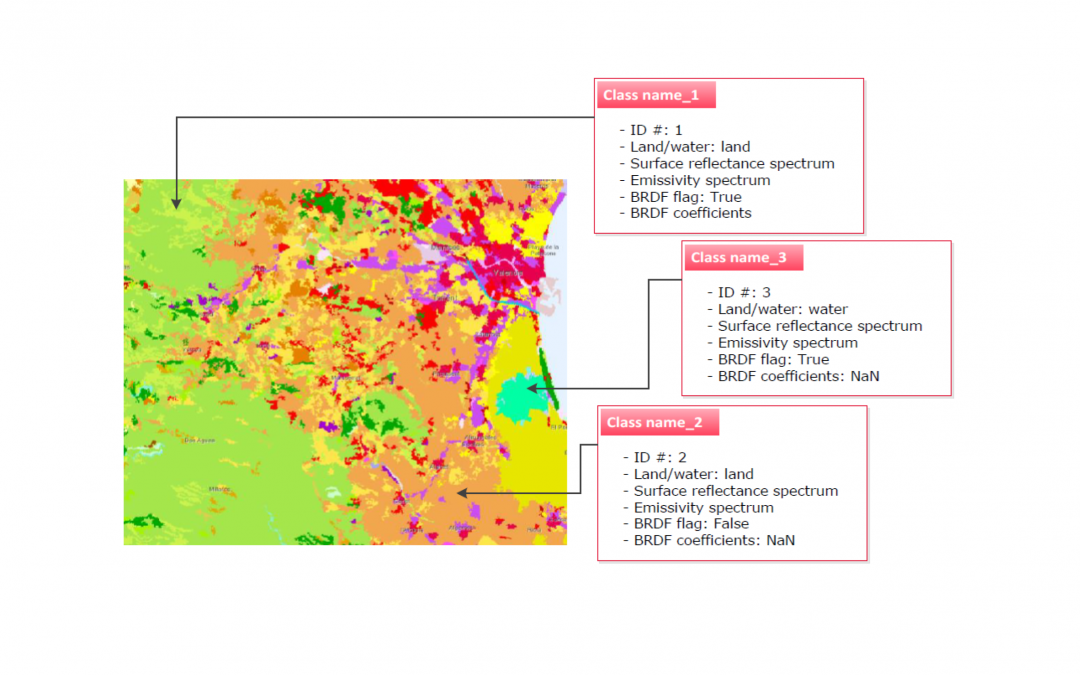
    The Earth Observation unit is responsible for the development of the synthetic scene simulator (SS). It’s a key component within an instrument simulator framework as it provides physically-realistic input stimuli of the targets observed by the satellite instruments. Also, this component allows to perform sensitivity assessments on the instrument configuration and Level 1 data processing.

    The objectives of GSOOS


        • Development of a generic end-to-end simulator for passive optical missions
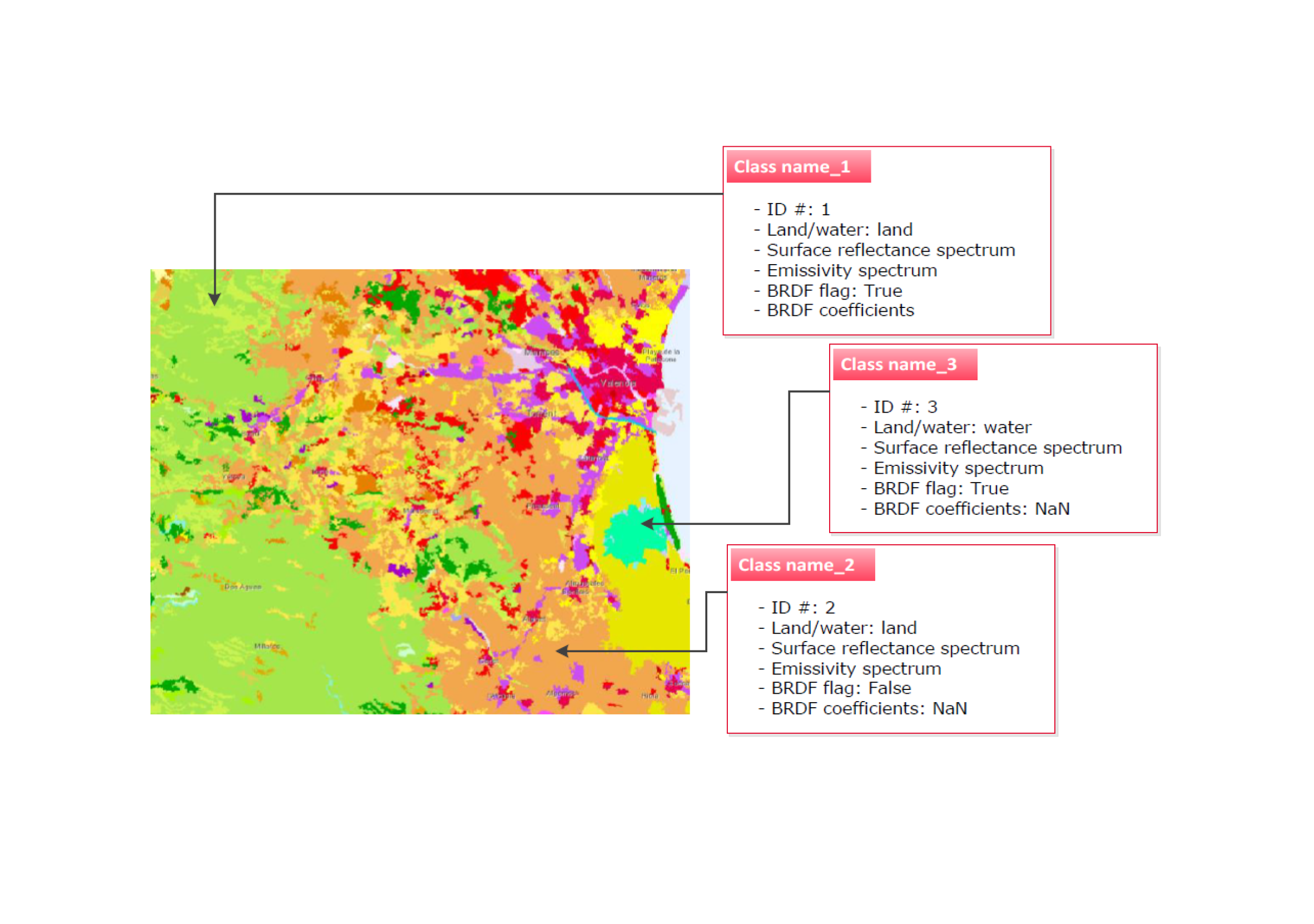
        • Synthetic scene generator taking into account BRDF effects, solar glow, environmental effects, reflection and emissivity, etc, for wavelengths from visible (400 nm) to thermal (14 µm)
        • Radiative transfer modelling (MODTRAN) for various atmospheric conditions
        • Integration into the BIBLOS library
    gsoos esa magellium

    Key partners

    GMV Spain, Thalès Alenia Space France, GMV Poland

    Key words

    tool, data, end-to-end simulator, synthetic scenes, space mission, MODTRAN, BiBLOS

    observation de la terre

    SCIENCE FOR EARTH CARE

    The Earth Observation Unit of Magellium  is an expert in optical space missions and geophysical and biophysical applications. The EO unit provides high level of expertise and full capacity on the whole processing chain, enabling it to respond to all projects from the greatest space orders such as ESA and CNES.
    Contact

    eo@magellium.fr

    +33 5 62 24 70 00

    1, rue Ariane
    31520 Ramonville Saint-Agne FRANCE

    More info

    www.magellium.com

    Follow us

    RadCalNet

    RadCalNet

    RadCalNet

    The RADiometric CALibration NETwork
    Portail de données

    radcalnet projet observation terre magellium

    Product

    Development, maintenance and updates of the RadCalnet portal for ESA

    U

    Skills

    Radiometry, calibration

    Date

    From 2013 to today

    The RadCalNet portal


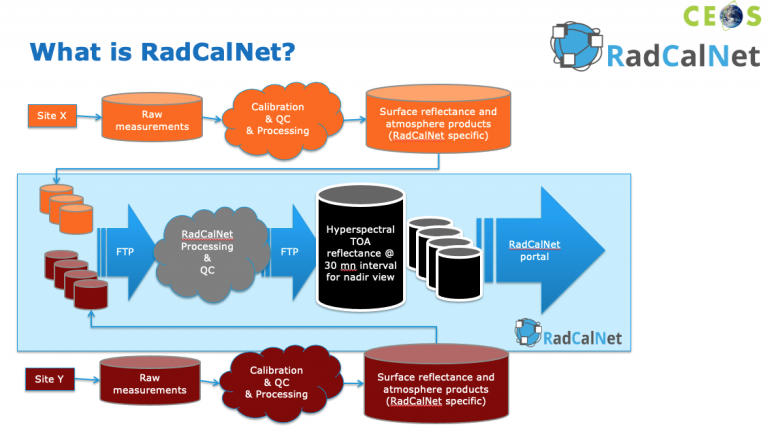
    RadCalNet is an initiative of the Working Group on Calibration and Validation of the Committee on Earth Observation Satellites. The RadCalNet service provides satellite operators with SI-traceable Top-of-Atmosphere (TOA) spectral resolution reflectances. This facilitates post-launch radiometric calibration and validation of optical imaging sensor data.

    The open access service provides a continuously updated archive of TOA reflectances derived over a network of sites, with associated uncertainties. These are collected at a spectral sampling interval of 10 nm, in the spectral range 380 nm to 2500 nm and at 30 minute intervals. Each individual site is equipped with automated ground-based instruments. These instruments provide continuous measurements of surface reflectance and local environmental/atmospheric conditions necessary to derive TOA reflectance values. The TOA reflectances, provided on this portal, are derived from the surface and atmospheric measurements of the individual sites. This is made possible by using a common method via a central processing system.

    Each member site takes responsibility for the quality of the surface and atmospheric measurements provided. Also, each member is subject to rigorous peer review and comparison. These checks ensure consistency from site to site and traceability of the SI.

    radcalnet esa magellium

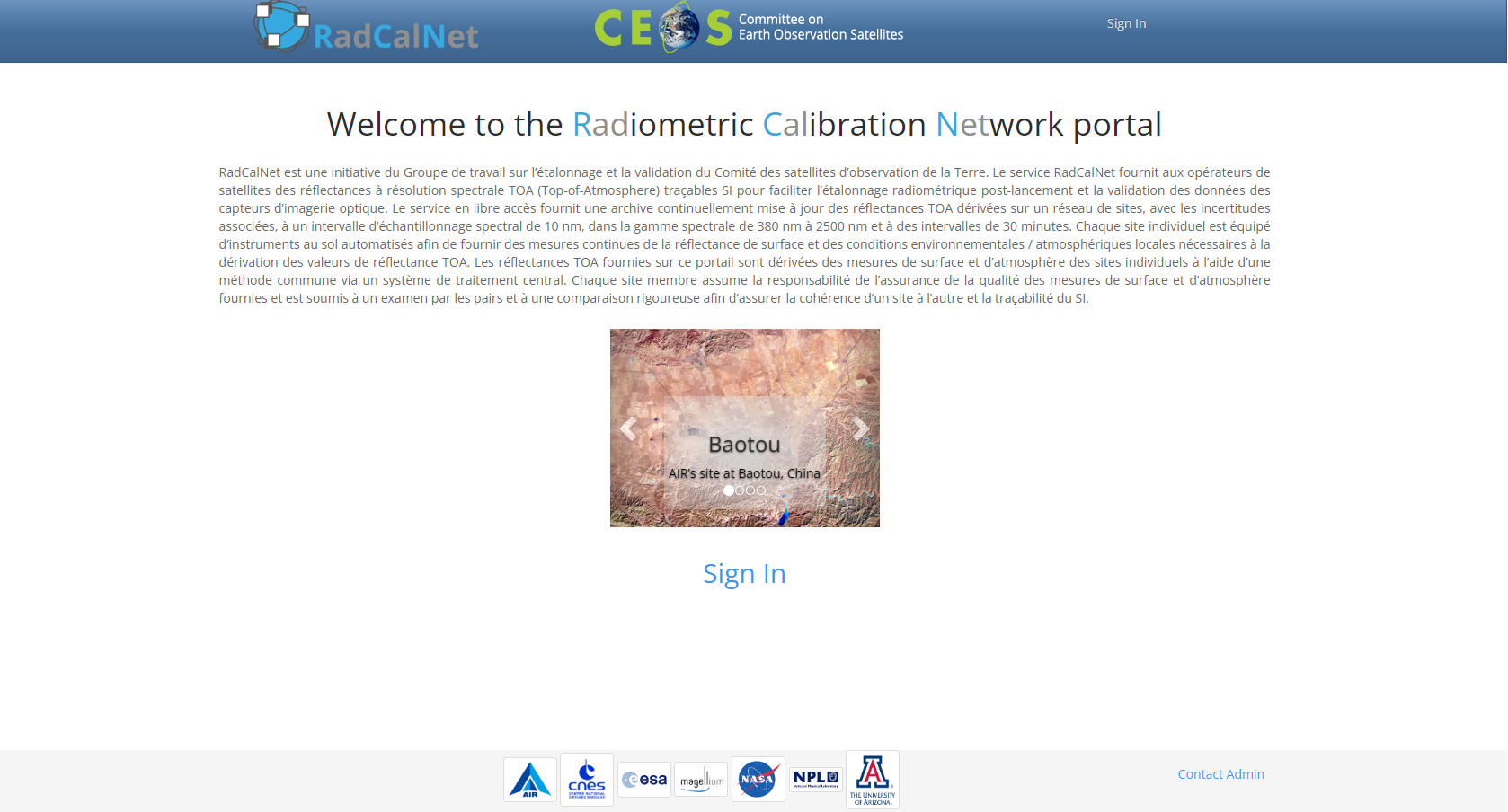
    Web interface of the RadCAlNet tool

    The Earth Observation Unit is in charge of the development, maintenance and evolution of the portal. We have participated in many space missions in the framework of RadCalnet: Pleiades HR 1 & 2, CALIPSO, Sentinel-2A & 2B, CSO-1,2 (3 soon), METOP-C/IASI-C, PARASOL, Venms, Megha-Tropiques, Pleiades Neo.

    We have been awarded a label of excellence by CNES for our expertise in this field.

    The portal provides access to all RadCalNet data sets, allowing users to view and download data acquired by the four instrumented reference test sites.

    The portal can be accessed on the website RadCalNet.

    What we do :


        • development, maintenance and evolution of the portal
        • in-orbit calibration of space-based sensors
        • a dedicated acquisition plan
        • a set of geometric and radiometric calibration parameters to be downloaded on board
        • a configuration of the image processing chain on the ground


    The RadCalNet portal currently has :

        • 521 users including :
          • representatives of national space agencies
          • private operators of optical
          • space sensors
            universities
        • 2014 days available for calibration since March 2013
    radcalnet magellium portail

    Key partner

    ESA

    Key words

    calibration, radiometry, portal, sensor, space, optical, reflectance, CEOS

    observation de la terre

    SCIENCE FOR EARTH CARE

    The Earth Observation Unit of Magellium  is an expert in optical space missions and geophysical and biophysical applications. The EO unit provides high level of expertise and full capacity on the whole processing chain, enabling it to respond to all projects from the greatest space orders such as ESA and CNES.

    Contact

    eo@magellium.fr

    +33 5 62 24 70 00

    1, rue Ariane
    31520 Ramonville Saint-Agne FRANCE

    More info

    www.magellium.com

    Follow us

    PICSCAR

    PICSCAR

    PICSCAR

    Portal on the characterisation of pseudo-invariant calibration sites

    picscar magellium observation terre

    Mission

    Prioritise research on Pseudo-Invariant Calibration Sites (PICS) and their use

    Instruments

    Optical sensor PARASOL

    U

    Skills

    Radiometry

    Date

    From 2016 to today

    The PICSCAR tool


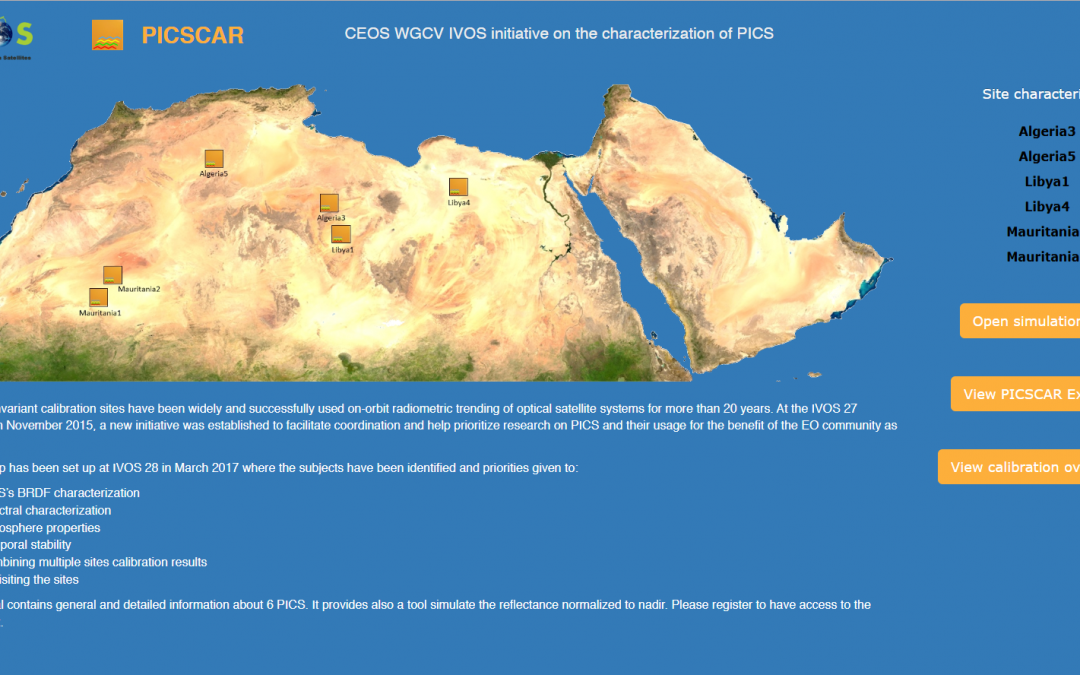
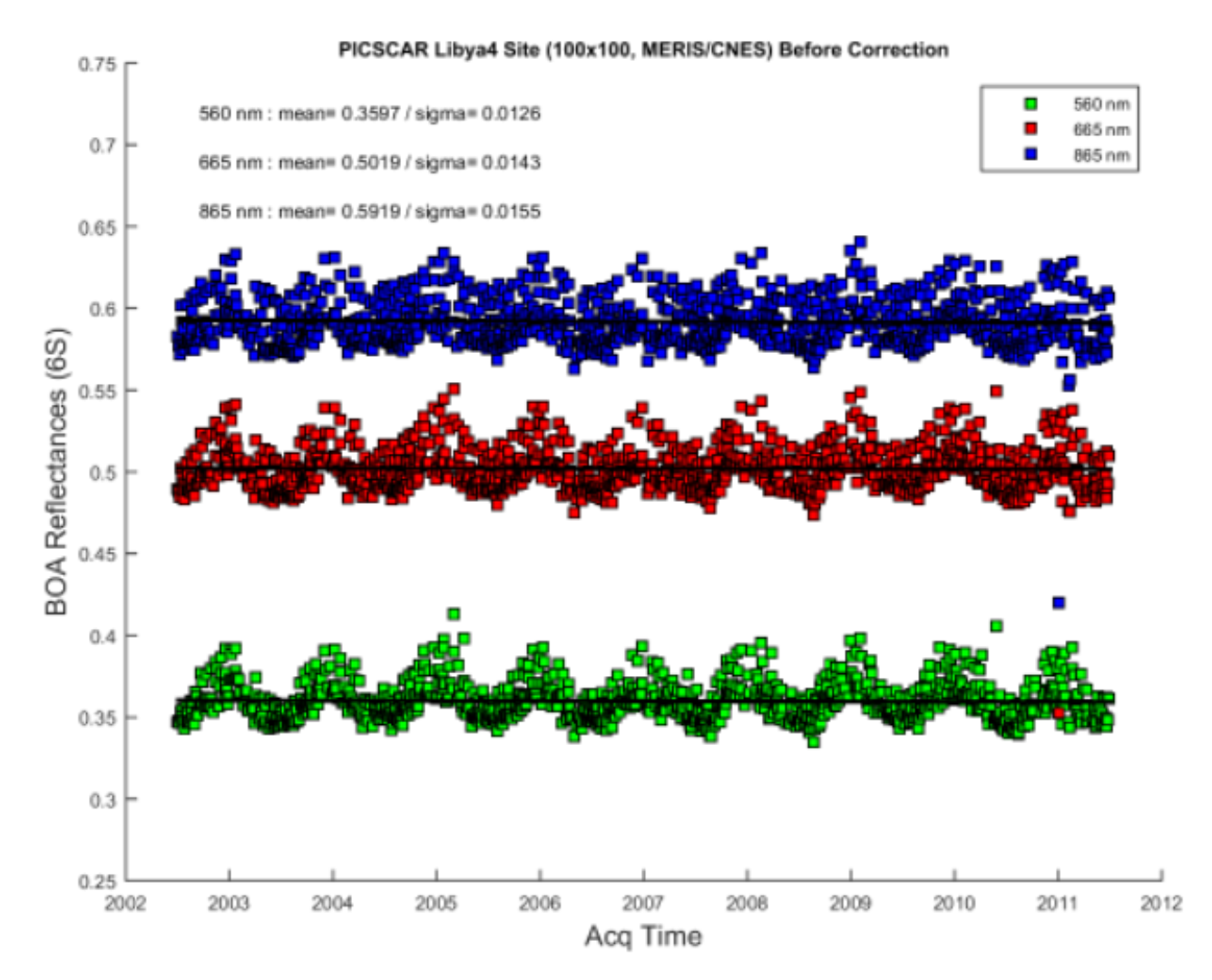
    PICSCAR is used to establish the intercalibration results. These results are obtained operationally by the different teams using their own data extraction and processing. These results are then made available to users via PICSCAR.

    The results of the intercalibration of L8 OLI against S2A MSI are uploaded every 6 months on the PICSCAR website.

    nous contacter observation terre magellium

    picscar outil magellium

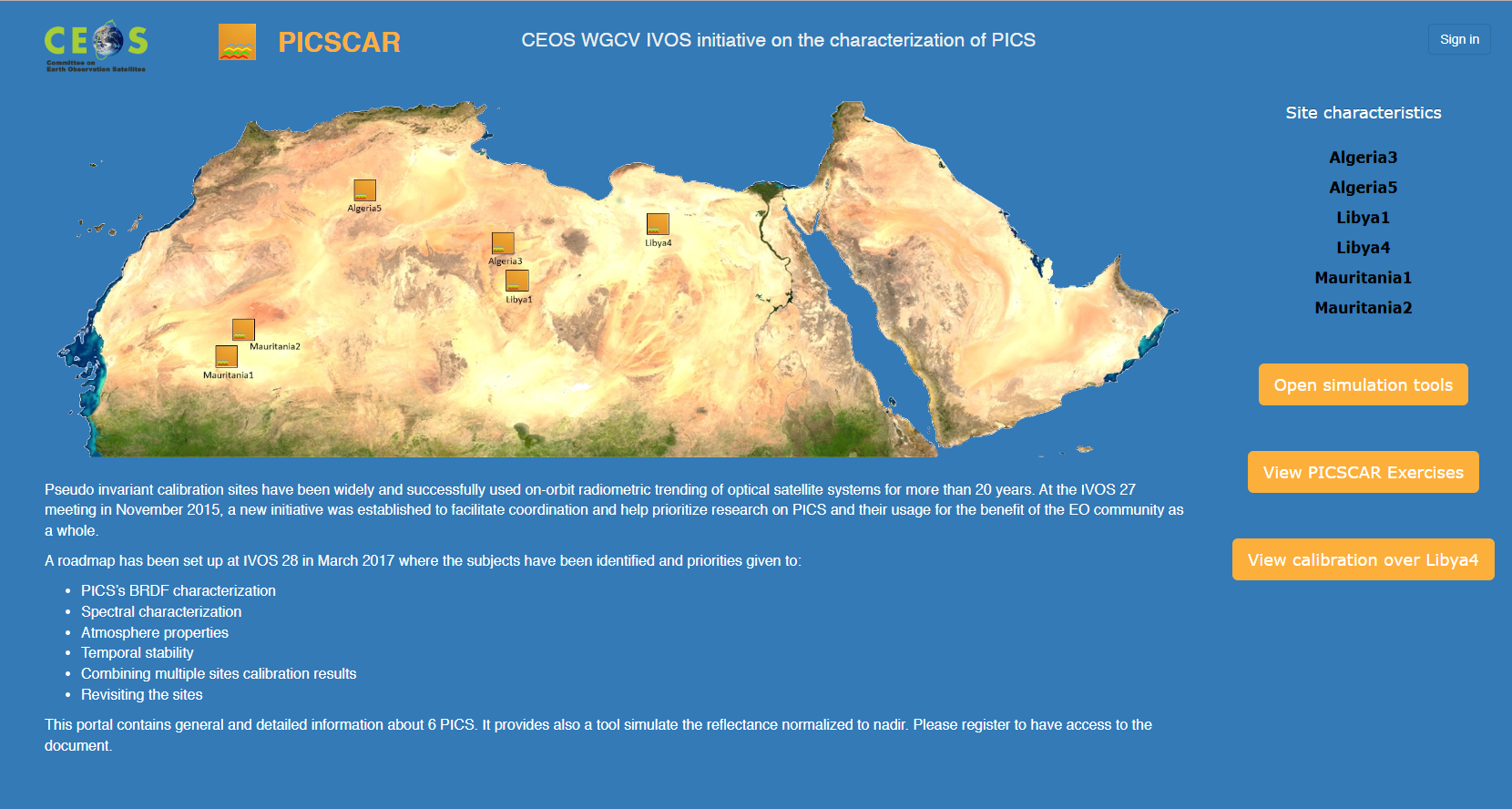
    Web interface of the PICSCAR tool

    The objectives of PICSCAR


          • BRDF
          • Spectral characterisation
          • Properties of the atmosphere
          • Temporal stability
          • Combining calibration results from several sites
          • Re-examination of sites
      picscar outil magellium

      Key partners

      CNES, Committee on Earth Observation Satellites (CEOS)

      Key words

      radiometry, tool, calibration, intercalibration, portal

      observation de la terre

      SCIENCE FOR EARTH CARE

      The Earth Observation Unit of Magellium  is an expert in optical space missions and geophysical and biophysical applications. The EO unit provides high level of expertise and full capacity on the whole processing chain, enabling it to respond to all projects from the greatest space orders such as ESA and CNES.
      Contact

      eo@magellium.fr

      +33 5 62 24 70 00

      1, rue Ariane
      31520 Ramonville Saint-Agne FRANCE

      More info

      www.magellium.com

      Follow us