DIMITRI

DIMITRI

DIMITRI

Database for Imaging Multi-spectral Instruments and Tools for Radiometric Intercomparison

Mission

Database for multispectral imaging instruments and tools for radiometric intercomparison

Instruments

Various optical sensors : SPOT, ERS-2, AQUA, PARASOL, ENVISAT

U

Skills

Sensor radiometry, radiometric measurements

Date

From 2014 to today

DIMITRI project


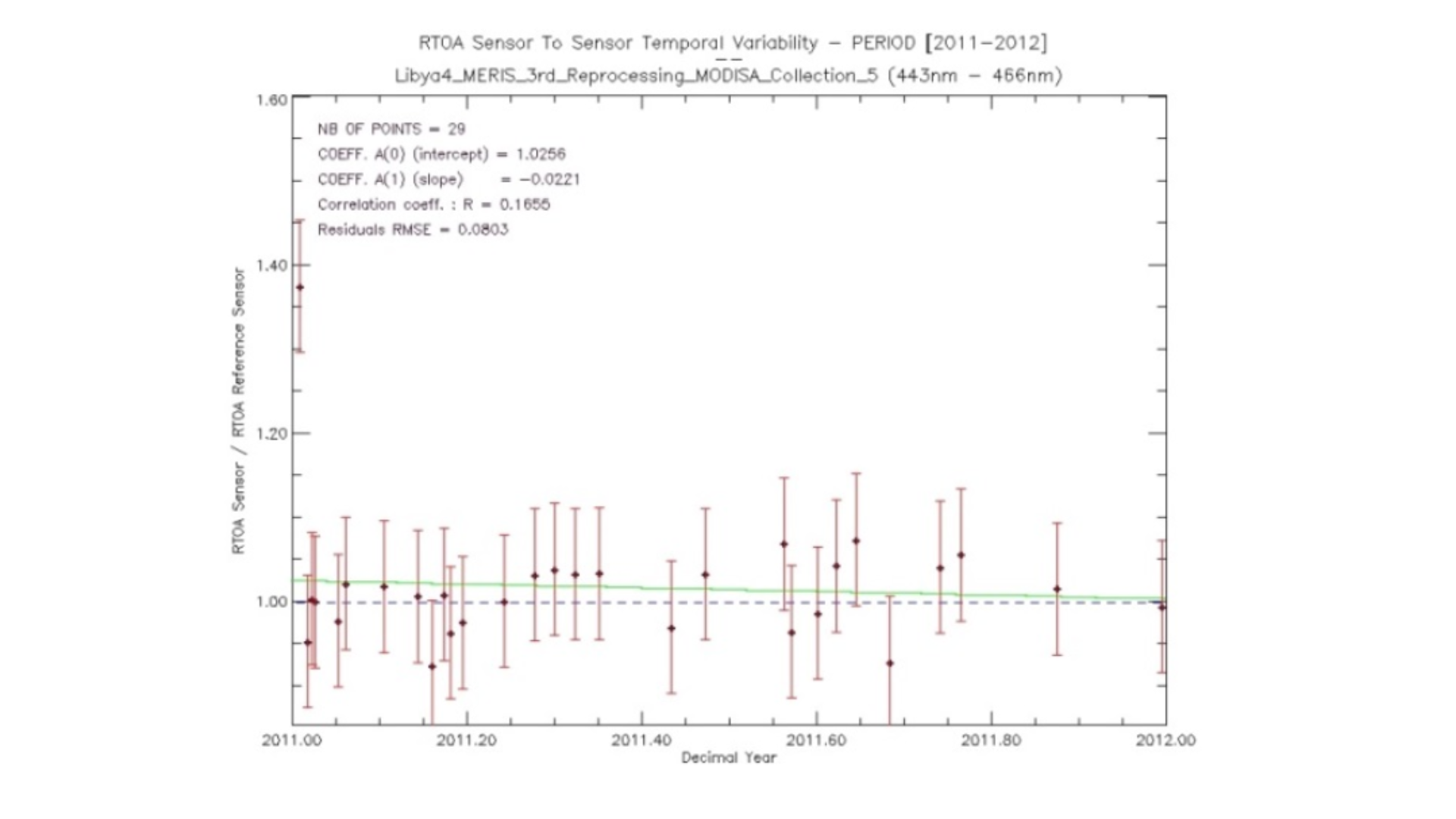
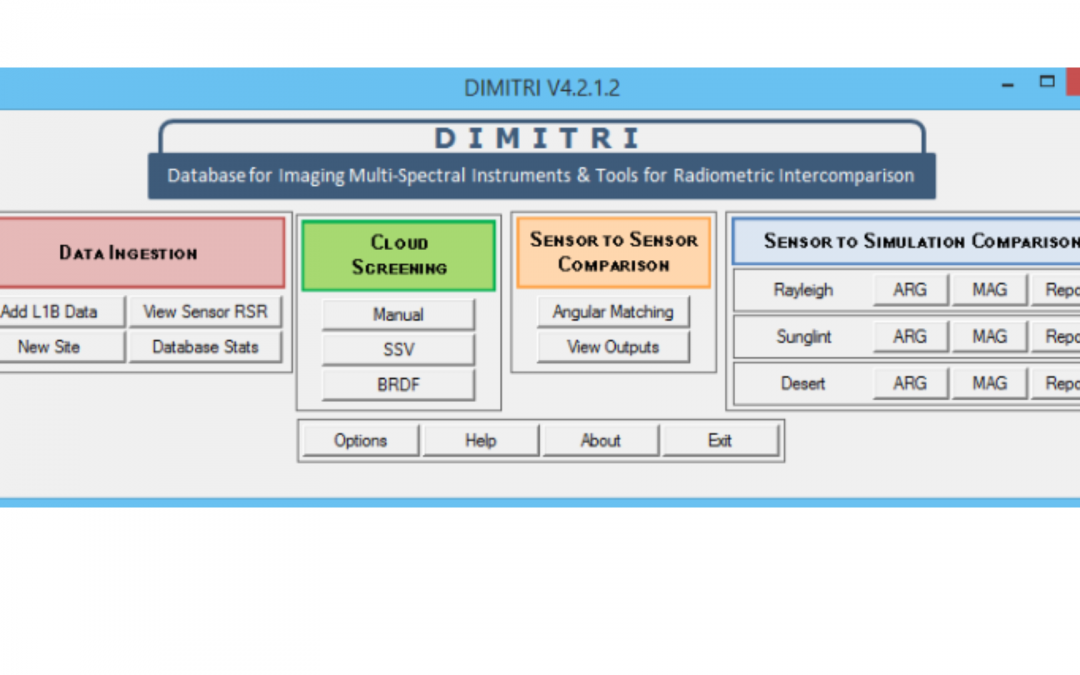
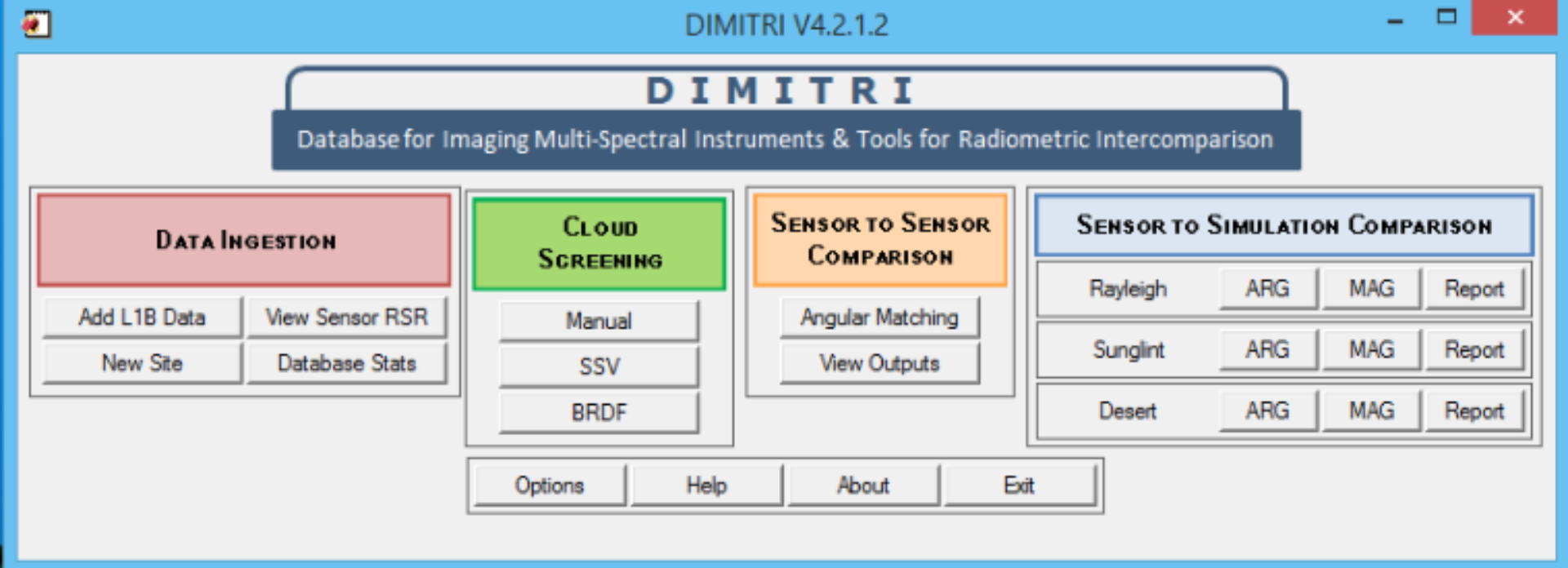
DIMITRI is a tool developed to check the radiometry of sensors using ground targets that have stable radiometric properties. This tool manages a database containing the level 1 radiometric measurements of different optical sensors: MERIS, MODIS, AATSR, AATSR2, S2A, OLCI, PARASOL, VEGETATION, etc. In addition, the DIMITRI tool allows intercomparisons to be made from the selection by using a reference sensor.
dimitri magellium

DIMITRI can be used for intercomparison of TOA radiance and reflectance values in the 400nm – 4μm wavelength range. This is generally known as Level 1b Earth Observation (EO) satellite data.


Learn more about the DIMITRI tool here.

nous contacter observation terre magellium

The objectives


DIMITRI’s features are the followings:

Sensor-to-sensor comparison

Sensor-to-simulation comparison

Based on radiative transfer simulations of TOA reflectances for

Rayleigh

Sunglint

Desert

On different sites:

Desert

Sunglint

Ocean

Cloud

Snow

dimitri magellium

Key partners

ESA, ARGANS

Key words

tool, radiometry, sensor, data, imagery, multispectral, SPOT, ERS-2, AQUA, PARASOL, ENVISAT

observation de la terre

SCIENCE FOR EARTH CARE

The Earth Observation Unit of Magellium  is an expert in optical space missions and geophysical and biophysical applications. The EO unit provides high level of expertise and full capacity on the whole processing chain, enabling it to respond to all projects from the greatest space orders such as ESA and CNES.


Contact

eo@magellium.fr

+33 5 62 24 70 00

1, rue Ariane
31520 Ramonville Saint-Agne FRANCE

More info

www.magellium.com

Follow us

Jilin-1 SP

Jilin-1 SP

Jilin-1 SP

Mission

Provide high resolution satellite imagery for mapping

Satellites

Jilin-1, remote sensing satellite

U

Skills

Geometric and radiometric calibration, image quality, remote sensing, monitoring evaluation

Date

2021

Jilin-1 SP project


Jilin is a constellation of Earth observation satellites developed by the Chinese company Chang Guang Satellite Technology. The two sensors of Jilin-1 Hyperspectral Satellite were successfully launched in January 2019.

The Jilin satellites aim to commercialise satellite space imagery. Therefore, they provide high resolution satellite imagery of 5 meters with 27 hyperspectral bands. Jilin-1 is useful for mapping, environmental monitoring, forestry, energy, land use planning and agriculture.

The unit is involved in this project in several areas. It assesses all key aspects of sensor data quality. These data are then compared with the requirements or specifications of the product sensors. This process uses the sample of sensor products provided.

nous contacter observation terre magellium

The objectives for Jilin-1


      • Sensor data quality
        • geometric and radiometric calibration
        • image quality
      • Object detection and tracking
      • Geometry assessment
        • Absolute geolocation accuracy
        • Temporal geolocation accuracy
        • Accuracy of Co-band recording
jilin satellite observation terre magellium

Launch of Jilin-1 satellite in 2019

Key partners

ESA, EDAP

Key words

satellite, China, Jilin, calibration, geometry, radiometry, measurement physics, hyperspectral, remote sensing, image quality

observation de la terre

SCIENCE FOR EARTH CARE

The Earth Observation Unit of Magellium  is an expert in optical space missions and geophysical and biophysical applications. The EO unit provides high level of expertise and full capacity on the whole processing chain, enabling it to respond to all projects from the greatest space orders such as ESA and CNES.
Contact

eo@magellium.fr

+33 5 62 24 70 00

1, rue Ariane
31520 Ramonville Saint-Agne FRANCE

More info

www.magellium.com

Follow us

Spot World Heritage L2

Spot World Heritage L2

SPOT World Heritage L2

Mission

Tool for connecting high spatial resolution time series to SPOT World Heritage data

Satellites

SPOT 1 to SPOT 5 satellites

U

Skills

Radiometry, geometry

Date

From 2020 to today

SPOT World Heritage L2


The SPOT World Heritage (SWH) programme is a CNES (French Centre national d’Etudes Spatiales) initiative to open the SPOT 1-5 archive to users. The archive is unique as it contains nearly 30 million images acquired by this family of satellites. Also, these images have been acquired since 1986.

The archive is produced by CNES at level 1A and at level 2A by the THEIA centre progressively.

In short, SWH is a tool for connecting high spatial resolution time series to SPOT World Heritage data.

nous contacter observation terre magellium

The objectives for SPOT World Heritage


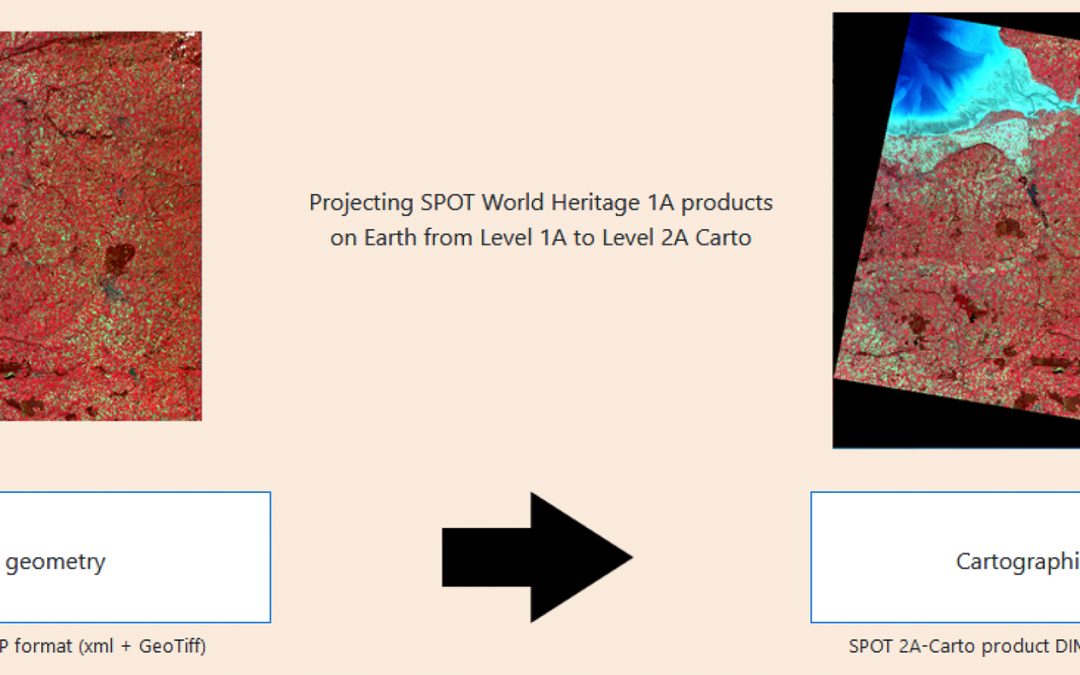
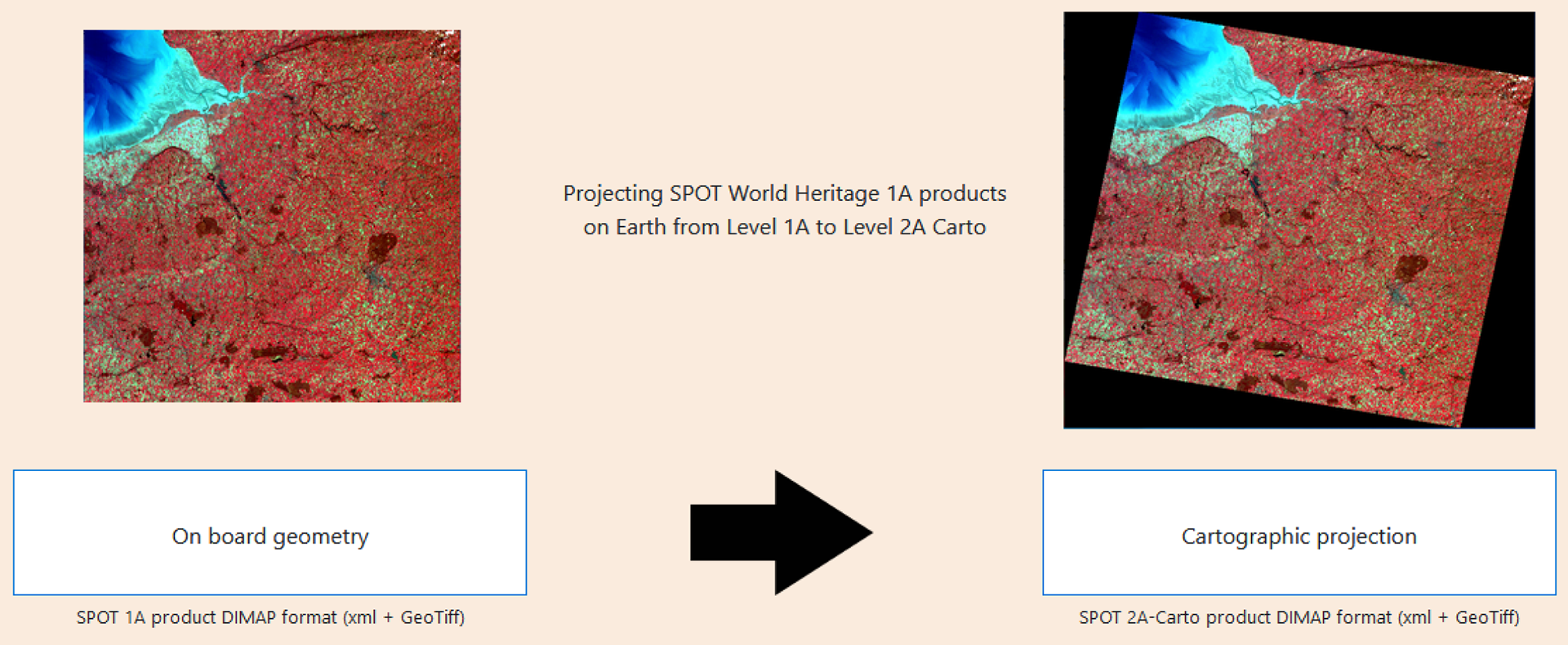
      • While waiting for the complete processing of the archive, a portal has been developed to easily process the raw geometry of the SWH Level 1A products into SWH products in line with the L1C Sentinel 2 products
      • The Carto-2A product is provided in a standard map projection (UTM).
spot world heritage magellium

Key partner

CNES

Key words

observation, satellite, earth, studies, image, cartography, SPOT, archive, portal, raw geometry, CNES

observation de la terre

SCIENCE FOR EARTH CARE

The Earth Observation Unit of Magellium  is an expert in optical space missions and geophysical and biophysical applications. The EO unit provides high level of expertise and full capacity on the whole processing chain, enabling it to respond to all projects from the greatest space orders such as ESA and CNES.
Contact

eo@magellium.fr

+33 5 62 24 70 00

1, rue Ariane
31520 Ramonville Saint-Agne FRANCE

More info

www.magellium.com

Follow us

OSMOSE

OSMOSE

OSMOSE

nous contacter observation terre magellium

Mission

Study of the opacity of vegetation using passive microwaves

Instruments

SMOS, AMSR-E, AMSR-2

U

Skills

Radiometry

Date

From 2022 to today

OSMOSE project


OSMOSE is an ESA project. It estimates the biomass and opacity of vegetation on the surface of our planet.

The objectives of OSMOSE


      • Estimate above-ground biomass using passive microwave sensors, such as SMOS, AMSR-E and AMSR-2,
      • Develop harmonised microwave band VOD datasets to assess the evolution of vegetation parameters (e.g. AGB) over the last 20 years from passive microwave sensors,
      • Exploit the optical domain to support the interpretation of vegetation characteristics from passive microwave observations.
osmose esa vegetation magellium

The key partners

ESA, GlobEO, WSL, INRAE, CESBIO, Université Toulouse III Paul Sabatier

Key words

observation, study, vegetation, microwave, ESA, radiometry

observation de la terre

SCIENCE FOR EARTH CARE

The Earth Observation Unit of Magellium  is an expert in optical space missions and geophysical and biophysical applications. The EO unit provides high level of expertise and full capacity on the whole processing chain, enabling it to respond to all projects from the greatest space orders such as ESA and CNES.

Contact

eo@magellium.fr

+33 5 62 24 70 00

1, rue Ariane
31520 Ramonville Saint-Agne FRANCE

More info

www.magellium.com

Follow us

OSMOSE

OSMOSE

Mission

Étude de l’opacité de la végétation par micro-ondes passives

Instruments

SMOS, AMSR-E, AMSR-2

U

Compétences

Radiométrie

Date

De 2022 à aujourd’hui

Le projet OSMOSE


OSMOSE est un projet de l’ESA. Il permet d’estimer la biomasse et l’opacité de la végétation sur la surface de notre planète.

nous contacter observation terre magellium

Les objectifs de OSMOSE


      • Estimer la biomasse aérienne à l’aide de capteurs micro-ondes passifs, tels que SMOS, AMSR-E et AMSR-2,
      • Développer des ensembles de données harmonisées de VOD par bande de micro-ondes pour évaluer l’évolution des paramètres de végétation (AGB, par exemple) au cours des 20 dernières années à partir de capteurs micro-ondes passifs.
      • Exploiter le domaine optique pour soutenir l’interprétation des caractéristiques de la végétation par les observations micro-ondes passives.
osmose esa vegetation magellium

Les partenaires principaux

ESA, GlobEO, WSL, INRAE, CESBIO, Université Toulouse III Paul Sabatier

Mots-clés

observation, étude, végétation, micro-ondes, ESA, radiométrie

observation de la terre

SCIENCE FOR EARTH CARE

L'unité Observation de la Terre de Magellium est experte en missions spatiales optiques et en applications géophysiques et biophysiques. L'unité offre un haut niveau d'expertise et une complète maîtrise sur l'ensemble de la chaîne de traitement, lui permettant de répondre à tous les projets des plus grandes commandes spatiales telles que l'ESA et le CNES.

Contact

eo@magellium.fr

+33 5 62 24 70 00

1, rue Ariane
31520 Ramonville Saint-Agne FRANCE

Plus d'infos

www.magellium.com

Suivez-nous